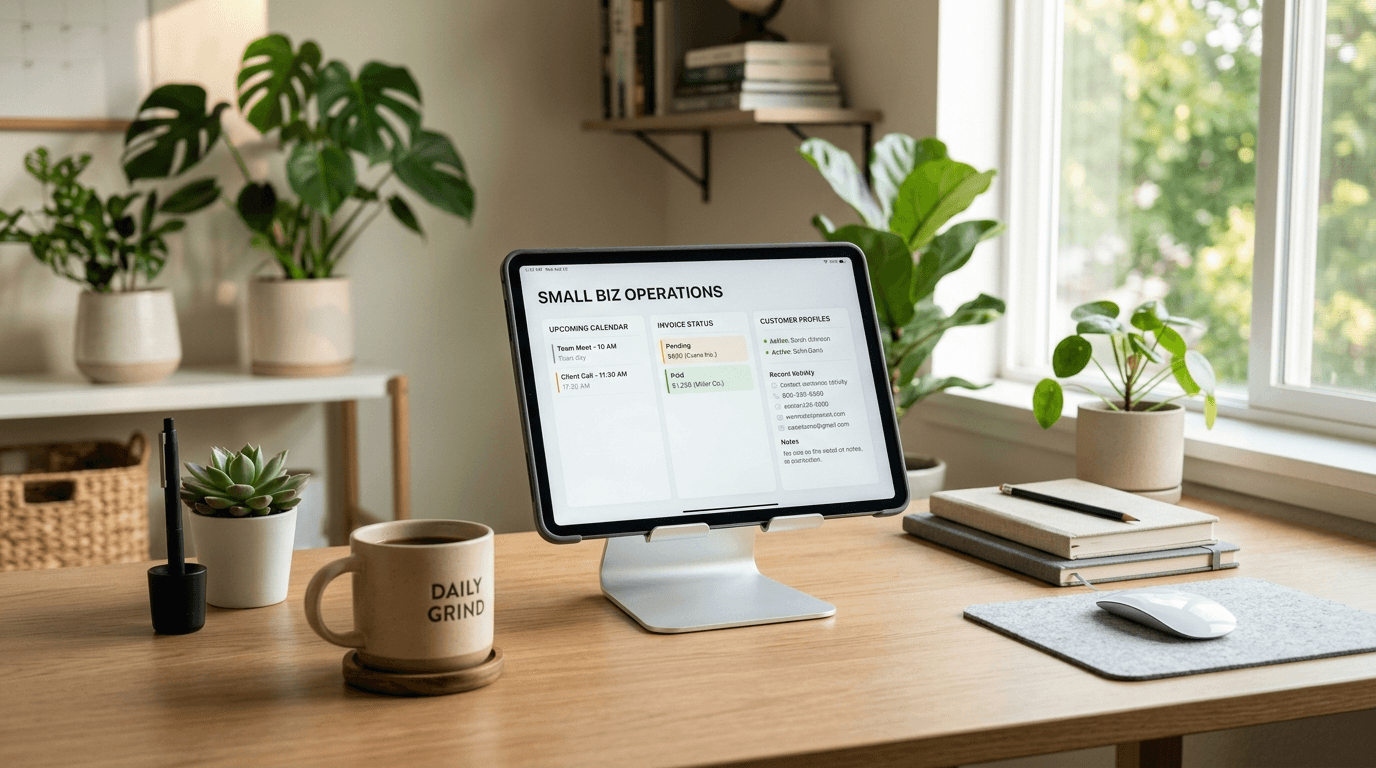
What is CRM automation and why do you need it?
CRM automation for small business is the process of using software to handle these repetitive, manual tasks automatically. Instead of you or your team manually typing emails or updating spreadsheets, the software does it for you based on triggers you set.
The hidden cost of manual data entry is massive. It isn't just about the time wasted; it's about the missed opportunities and the inevitable human errors that occur when you're overwhelmed.
When you automate your service business, you stop acting like a data clerk. You get to focus on the high-value work that actually brings in revenue—talking to customers and perfecting your craft.
Image unavailable: Image not yet generated
Which tasks should you automate first?
Not every process needs a robot behind it. Start by looking for tasks that are repetitive, predictable, and low-value. If a task requires no creative thought, it is a prime candidate for automation.
Focus your energy on these three high-impact areas first:
- Appointment scheduling: Use automated calendars to let clients book directly into your slots, eliminating the back-and-forth email chains.
- Follow-up emails: Trigger personalized messages immediately after a lead fills out a form or finishes a discovery call.
- Invoice reminders: Send automatic, polite nudges to clients when payments are due so you can stop being the bad guy.
Start small. Choose one single manual process that frustrates you the most and automate just that one piece before expanding.
How do you set up your first automated workflow?
You do not need a degree in computer science to do this. Most modern customer relationship management guide resources emphasize "no-code" tools, which are specifically designed for non-tech-savvy owners.
Follow these steps to map your first workflow:
- Map the journey: Write down every step a customer takes from initial inquiry to final payment.
- Identify the trigger: Decide what "starts" the action, such as a contact form submission or a closed deal.
- Set the action: Use "if-this-then-that" logic. For example, "If a lead fills out the quote form, then send them a welcome email."
Image unavailable: Image not yet generated
Common mistakes to avoid as a beginner
While automation is powerful, it is easy to go overboard. The biggest trap beginners fall into is "over-automation," where they strip all humanity out of their client interactions.
Remember that you are in a service business. Your clients buy from you because of your expertise and your relationship with them. If your automated emails sound like a robotic form letter, you will lose that connection.
Never automate your apology emails or sensitive client conflict resolutions. Those require a human touch to maintain trust.
Always test your workflows before going live. Send test emails to yourself and simulate a customer journey to ensure the timing and content are perfect.
Measuring success: Are your automations working?
You need to know if this tech is actually paying off. Don't guess; look at the data your CRM provides.
Track these three key metrics to gauge your success:
- Hours saved per week: Estimate how many manual hours were replaced by the system to calculate your new capacity.
- Customer response rates: See if your automated follow-ups are getting more replies than your old manual process.
- Lead conversion speed: Monitor how much faster leads move from "potential" to "paid client" once the automation is active.
Data doesn't lie. If you see high drop-off rates at a specific automated step, tweak the messaging or the timing to improve the flow.
Frequently Asked Questions
Is CRM automation expensive for small businesses?
Not necessarily. Many tools offer tiered pricing or free versions for beginners. The cost of not automating—in terms of your lost time—is almost always higher than the monthly subscription fee.
How do I keep my brand voice while using automation?
Write your templates in your natural speaking style. Avoid corporate jargon and keep sentences short. If you wouldn't say it in a real conversation, don't put it in an automated email.
Can CodeRift help me set up my CRM?
Absolutely. If you feel overwhelmed by the technical setup or just want to ensure your systems are built for scale, we are here to help. Book a free audit call with CodeRift today to see how we can save you hours every week.